Science and data
Targeting a required step in measles virus entry
Mechanism of action
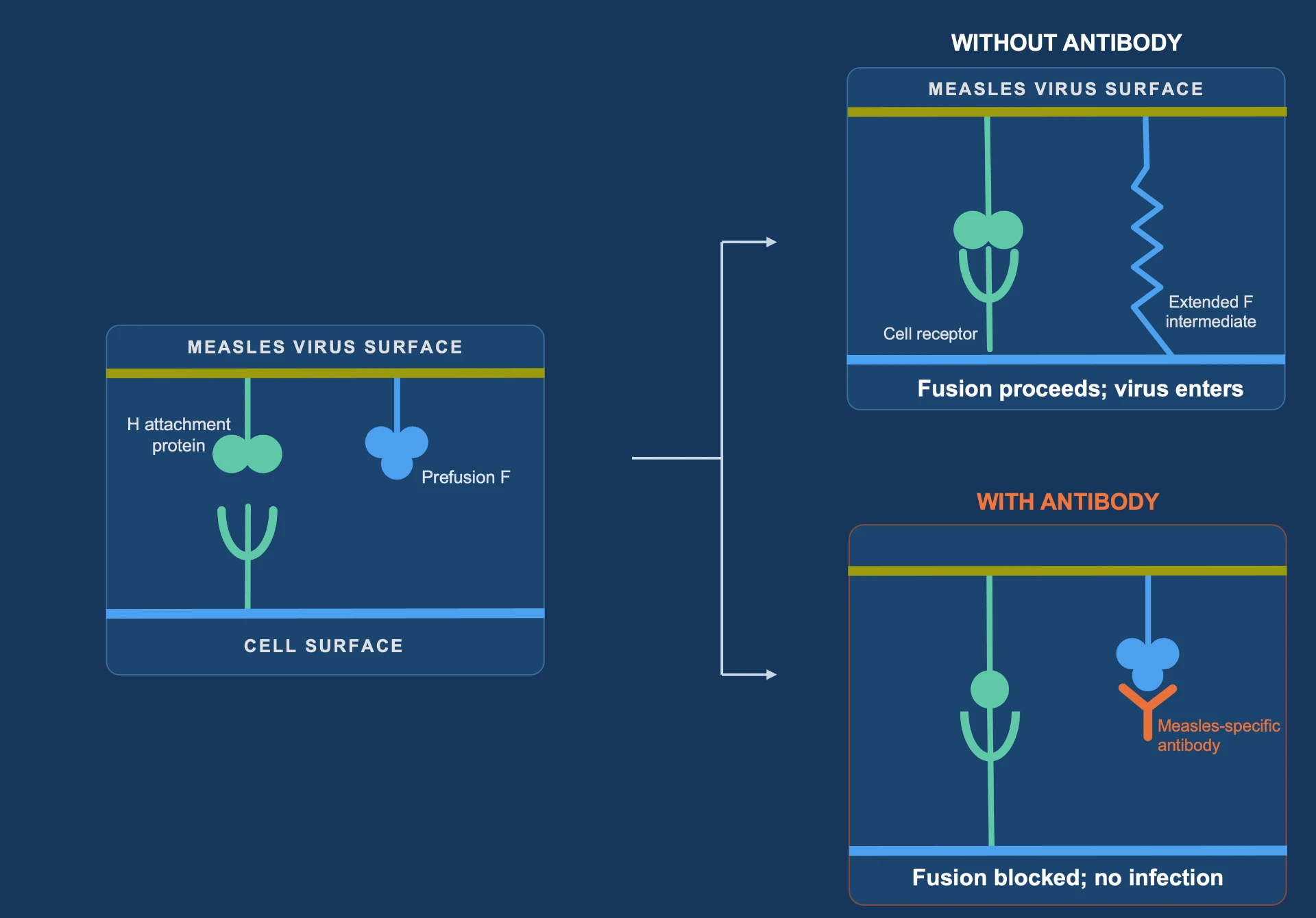
Measles virus entry requires coordinated activity of its receptor-binding and fusion proteins. The fusion protein drives merger of the viral and cellular membranes. Saravir’s antibodies are designed to bind functionally important regions of the fusion protein and prevent the conformational changes required for viral entry.
Because protection is conferred by the administered antibody itself, it does not require the recipient to mount an immune response.
Antibody discovery
The antibody program originated from human monoclonal antibody research at Vanderbilt University. Human monoclonal antibodies were isolated from previously infected individuals and evaluated for their ability to bind and neutralize measles virus.
- Technology origin
- Antibody research at Vanderbilt University Medical Center
- Corporate rights
- Exclusive license
- Lead candidates
- MEV-15 and MEV-104
- Antibody source
- Human monoclonal antibodies isolated from previously infected individuals
Preclinical evidence
Resistance
No escape variants resistant to the antibody combination were detected under the in vitro selection conditions tested to date. Escape mutants selected against one lead antibody remained susceptible to the other.
The antibody combination is designed to increase the barrier to viral escape by targeting nonoverlapping conserved epitopes. These are in vitro observations under defined conditions and do not establish that resistance cannot emerge.
A manuscript describing the lead antibodies is currently under review.